
Research
Economic and social impacts of rural-to-urban water transfers
Integrated agent-based and economic models trace how water-right transfers affect farms, employment, services, and the long-term resilience of rural communities.
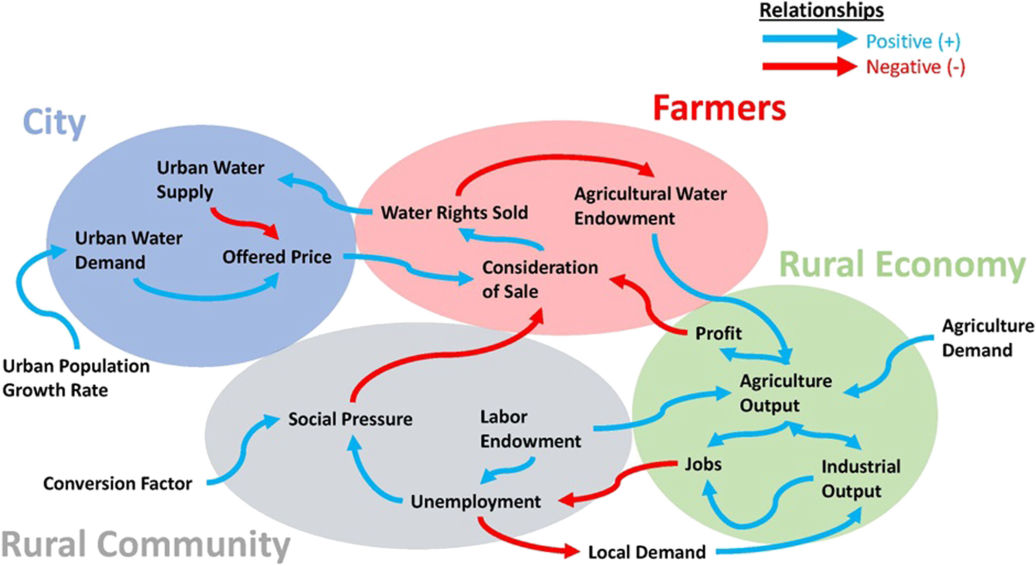
Growing urban water demands and declining basin supplies are increasing pressure to move water from rural agriculture to cities. The broader socioeconomic consequences of these transfers, however, remain poorly understood.
As water rights move away from irrigators, declines in crop production can reduce employment and economic activity across interconnected rural sectors. Our integrated agent-based and input–output modeling work traces those impacts and helps decision-makers understand the trade-offs between urban growth and long-term rural resilience.
This research provides evidence for water-transfer strategies that meet urban needs while reducing avoidable harm to agricultural communities.