
Research
Groundwater management across the crop–hydrology–agent nexus
Behaviorally grounded modeling explores how farmer decisions, policy design, and environmental heterogeneity influence groundwater conservation.
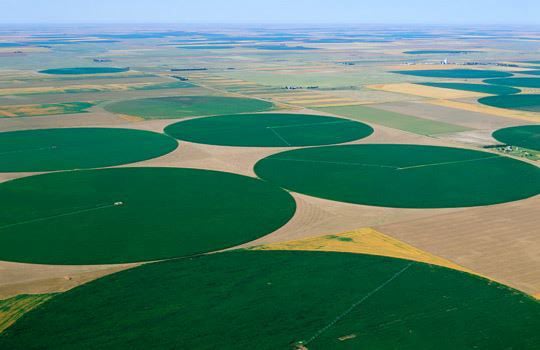
Groundwater depletion threatens water and food security worldwide. In western Kansas, the Sheridan 6 Local Enhanced Management Area is a pioneering, community-driven program in which farmers collectively establish and enforce conservation rules.
Using PyCHAMP, an agent-based model grounded in behavioral theory and empirical survey and interview data, we examine how environmental heterogeneity, farmers’ risk perceptions, crop insurance, and internal variability influence policy performance.
We work with policy scientists, economists, engineering researchers, and local stakeholders to integrate knowledge and generate insights for future conservation-policy design.